
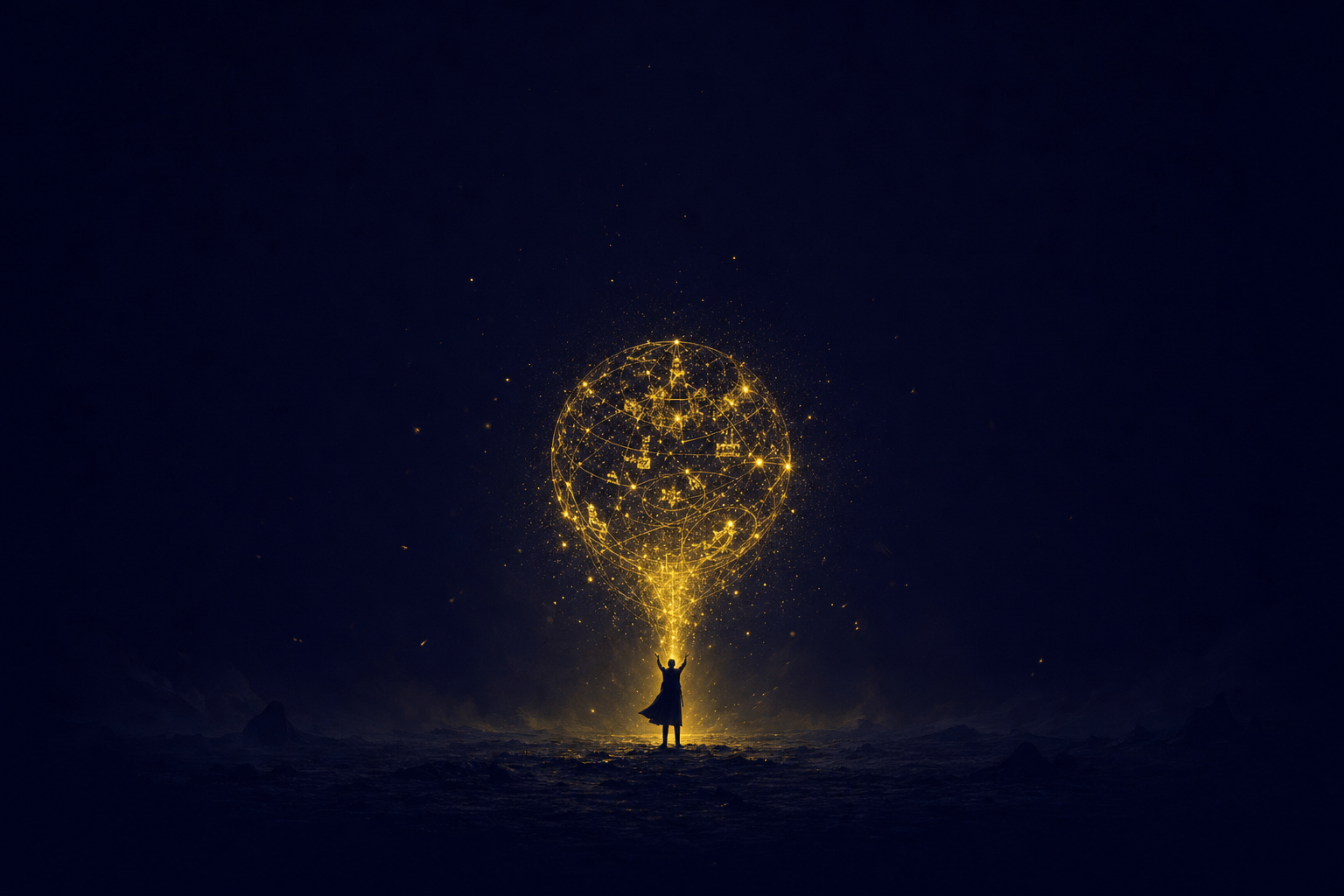
The future belongs to creatives
For most of modern entertainment history, the same pattern has repeated itself.
A writer imagines a world. An artist gives it shape. Actors, designers, editors, musicians, animators, producers, builders, and crews pour their labor into making it real.
Then a much smaller group captures most of the upside.
Not always because they created the thing. Often because they controlled the financing, distribution, rights, audience relationship, or machinery around it. They owned the path between the creative act and the market. They owned the leverage.
That arrangement became so normal that we stopped seeing how strange it is.
The people who generate the culture are too often treated like suppliers to someone else’s system. They bring the imagination, taste, labor, memory, and emotional risk. They create the worlds audiences fall in love with. But the compounding value of those worlds frequently belongs somewhere else.
Khaos exists because we believe that order is breaking.
The future belongs to creatives.
Not as a slogan. As a structural shift.
The old model was built around extraction
The entertainment business has always needed coordination. Stories are expensive to produce. Teams are hard to organize. Distribution is powerful. Capital matters.
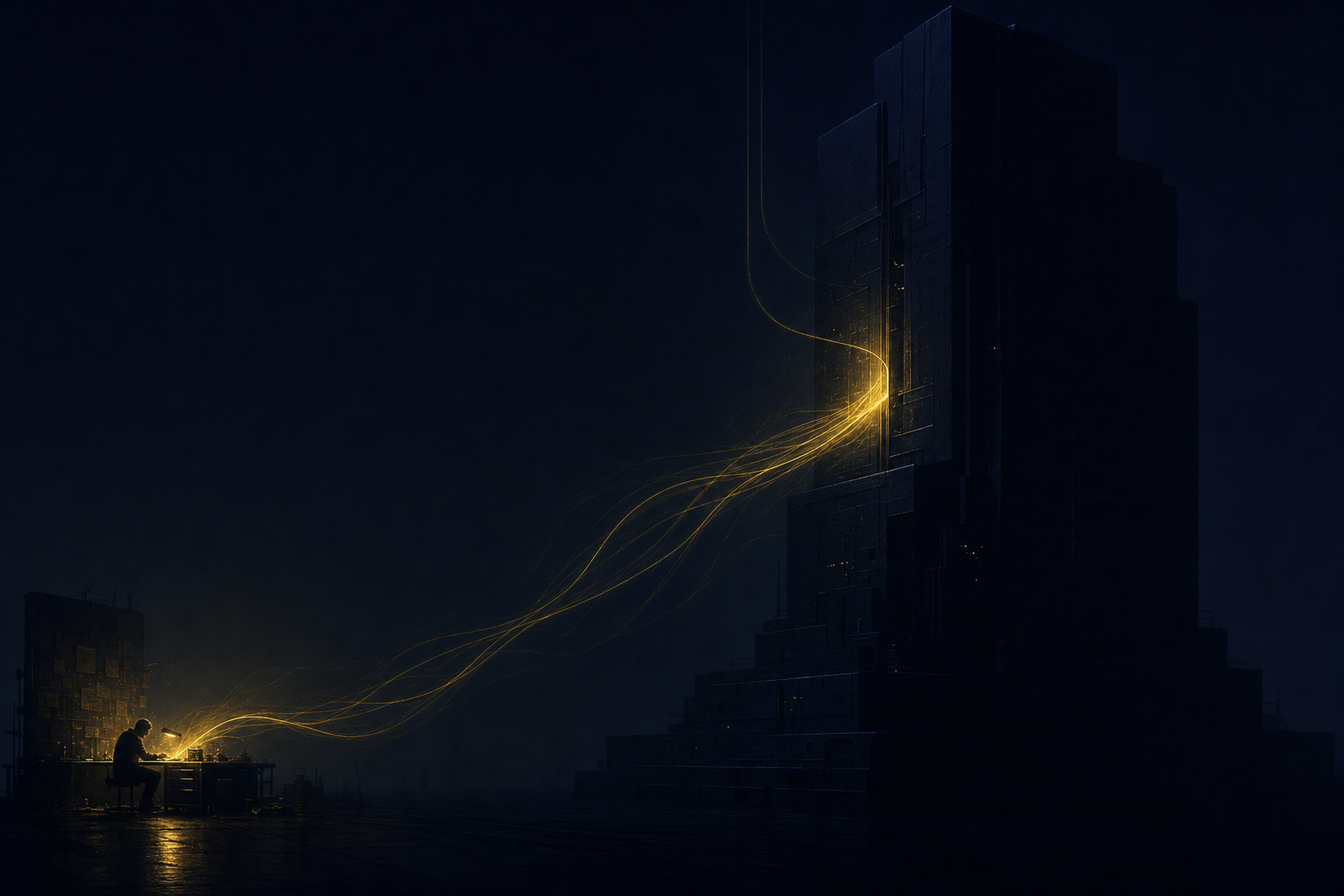
But over time, the machinery around storytelling became the dominant force. The creative source became one input among many: a script in a folder, a pitch in a room, a deck in a pipeline, a piece of IP waiting to be packaged.
That model rewards the people who control the system more than the people who imagine the worlds.
A creator can spend years developing characters, tone, lore, relationships, visual language, story logic, and emotional truth, only to watch that work become fragmented across documents, meetings, contracts, notes, decks, spreadsheets, production plans, and memory.
The work becomes scattered.
The authorship becomes diluted.
The value moves away from the source.
This is not just a business problem. It is a storytelling problem.
When the world of a story is trapped in disconnected artifacts, the story gets smaller. Continuity breaks. Characters flatten. Context disappears. Every new format requires a painful translation. Every collaborator has to reconstruct the truth from fragments.
The old model treats stories like static documents that later become productions.
But the most valuable stories were never just documents.
They were worlds.
The next category is immersive storytelling
We call the category immersive storytelling.
That does not mean headsets. It does not mean one medium. It does not mean a gimmick layered on top of a script.
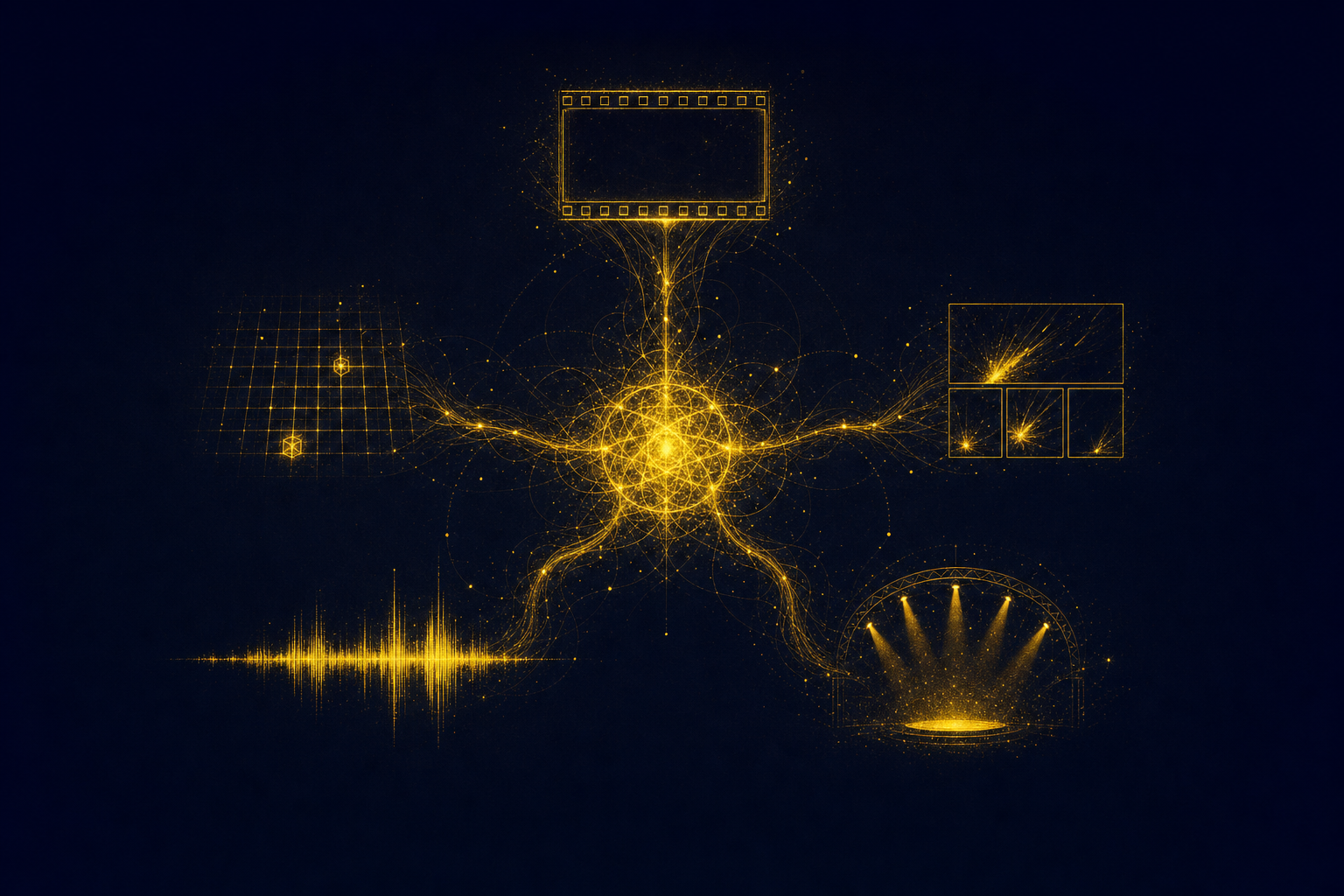
Immersive storytelling is the craft of building storyworlds audiences can enter across formats.
A storyworld is bigger than a screenplay. It includes characters, relationships, histories, rules, places, timelines, conflicts, rituals, secrets, emotional arcs, visual language, sound, memory, canon, and possibility.
A storyworld can become a film, a series, a game, a comic, an audio experience, a live event, an interactive narrative, an AI-native experience, a fan community, or some format that does not have a name yet.
The medium may change.
The world remains.
This is the shift we care about: from isolated scripts to living story systems. From one-off production artifacts to durable creative infrastructure. From asking, “What is the next output?” to asking, “What world are we building, and who gets to own its future?”
Creatives should not have to become corporations to have leverage
One reason the old system lasted so long is that leverage was expensive.
To own more of the process, a creator needed access to money, teams, tools, distribution, legal support, production experience, marketing channels, and technical infrastructure. That meant many artists had to choose between control and reach.
Keep control, and stay small.
Get reach, and give up control.
That tradeoff has shaped generations of creative work.
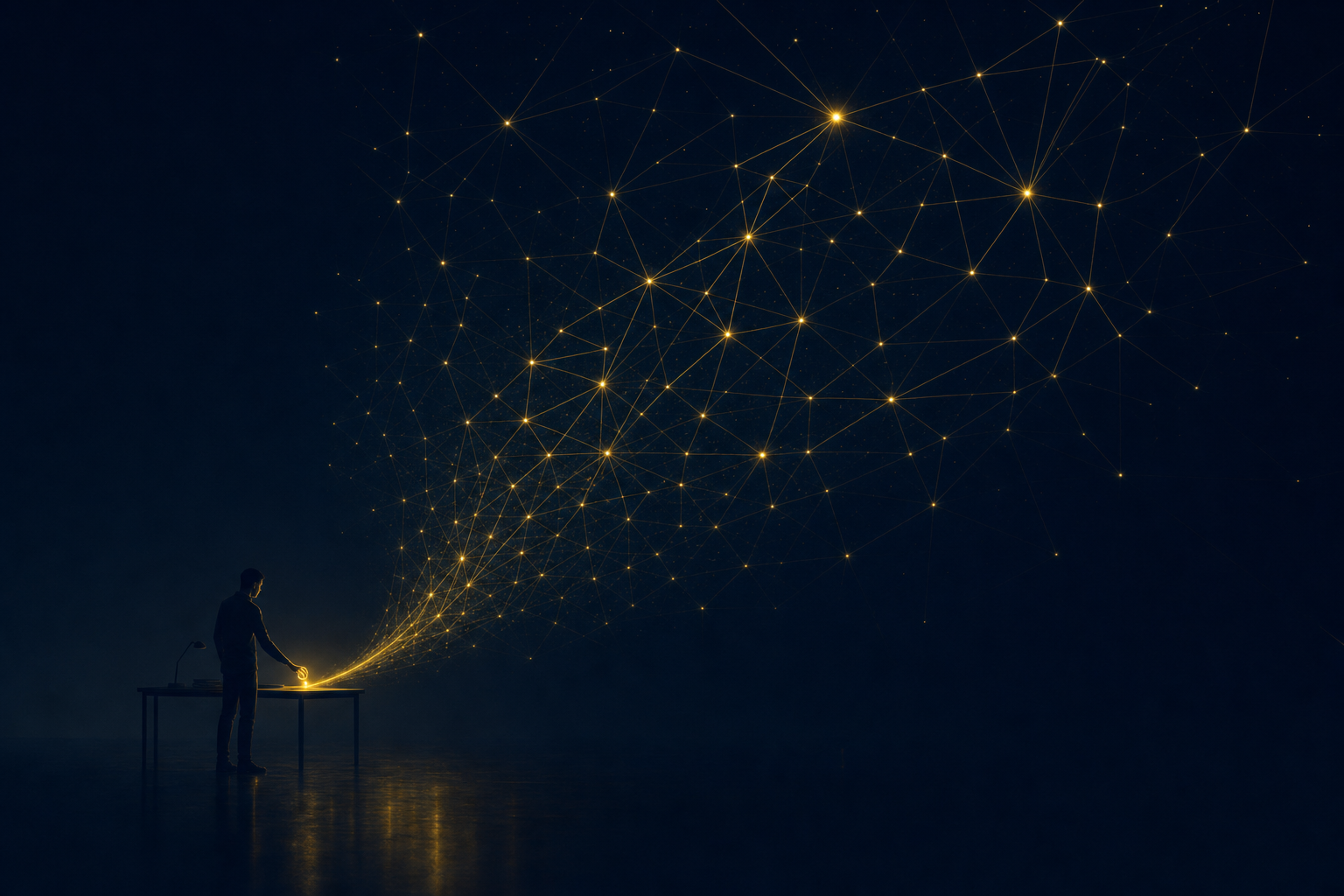
But software changes what a small team can hold. AI changes what a small team can explore. New distribution channels change how audiences are found. New production methods change what can be prototyped before permission is granted.
The point is not that machines replace artists.
The point is that artists should have more leverage.
The future does not belong to machines. It belongs to creatives who know how to use machines without becoming subordinate to them.
Technology should give a storyteller more memory, not less authorship. More continuity, not more noise. More ways to explore a world, not more pressure to surrender taste. More ability to coordinate a team, test an idea, protect canon, and carry a vision across formats.
Creative infrastructure should make a writer, director, animator, designer, musician, or small studio more powerful without forcing them to disappear into someone else’s machine.
From suppliers to studios
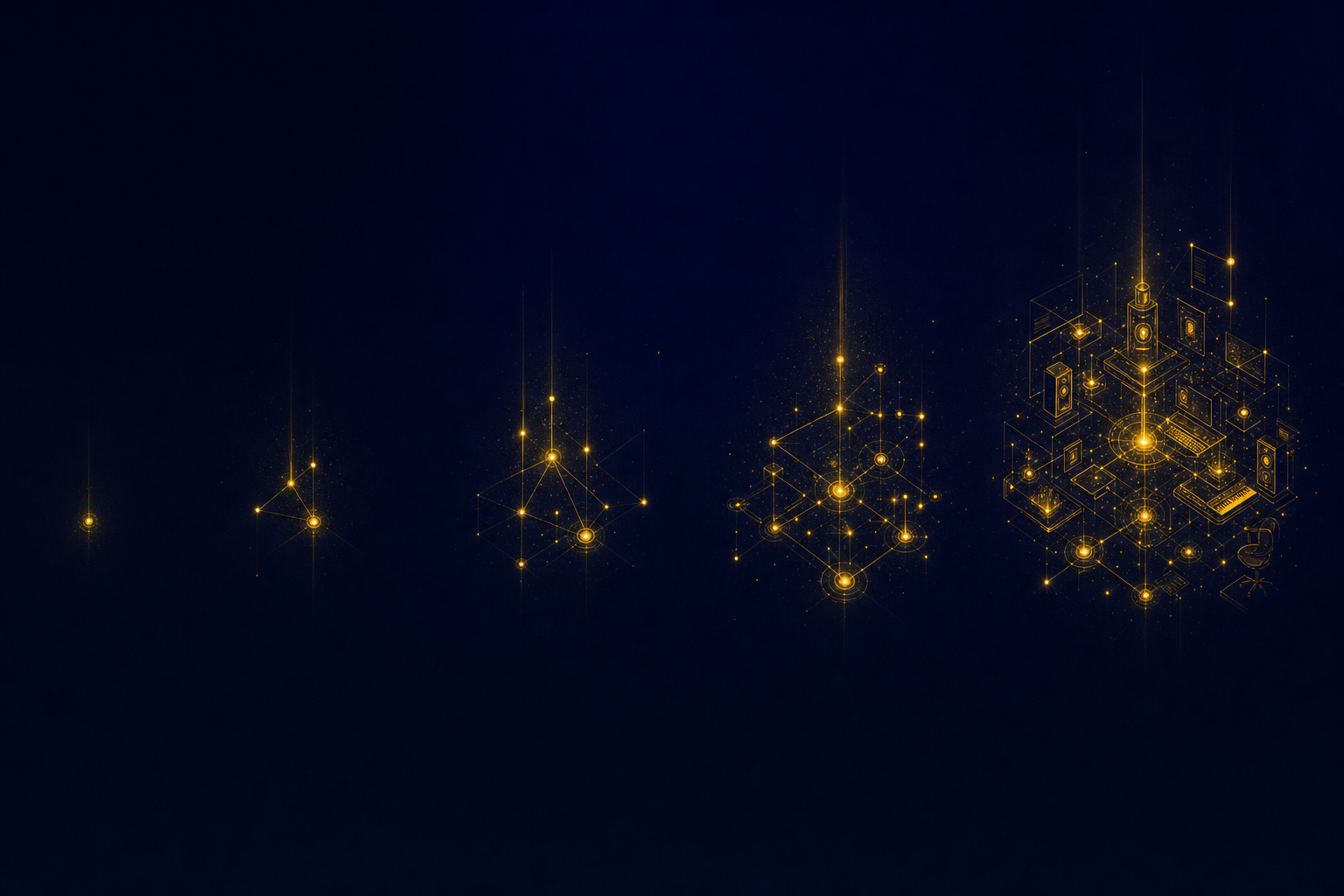
The real shift is not simply that stories will become more interactive, more visual, or more intelligent.
The deeper shift is that creatives can become studios earlier.
A studio is not just a building or a financing entity. A studio is a system for developing, protecting, extending, and monetizing creative worlds.
For most of entertainment history, that system was difficult to build. It required institutional power.
Now the system can be smaller, more personal, more networked, and more creator-owned.
A storyteller should be able to carry the source of truth for a world from first idea to production to expansion. A team should be able to understand not just what happens in a scene, but why it matters, what it changes, what it contradicts, what it reveals, and what it makes possible.
A creative world should not live only in someone’s head until it is flattened into a deliverable.
It should be explorable.
It should be structured without becoming sterile.
It should make collaboration easier without stripping away the weirdness and specificity that made the work worth making in the first place.
That is the promise of immersive storytelling.
Not more content.
More coherent worlds.
Not faster slop.
More leverage for the people with taste.
The chaos created
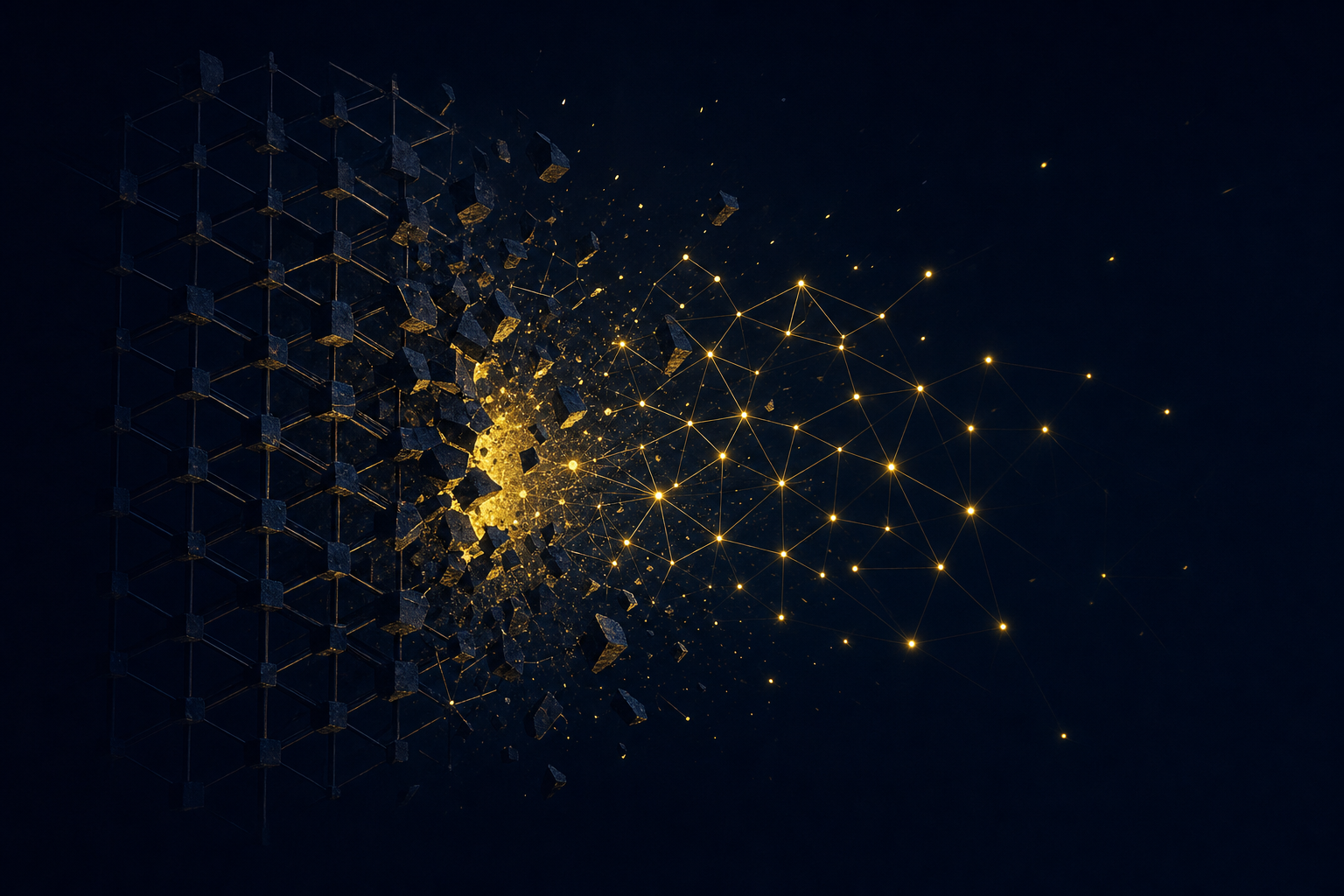
Khaos is not chaos for chaos’s sake.
The chaos we care about is the disruption of an extractive order.
It is the moment when the people who create the value can keep more of the value. The moment when a small team can hold a world with the discipline of a studio. The moment when a story can move across formats without losing its soul. The moment when creative infrastructure gives power back to the source instead of pulling it away.
That is the category we are building toward.
Immersive storytelling is not just a new kind of media. It is a new way to organize creative power around worlds instead of documents, around ownership instead of extraction, around talent instead of machinery.
The future belongs to creatives.
The next era of entertainment should be built for them.